
Water Heater Installation in Laredo
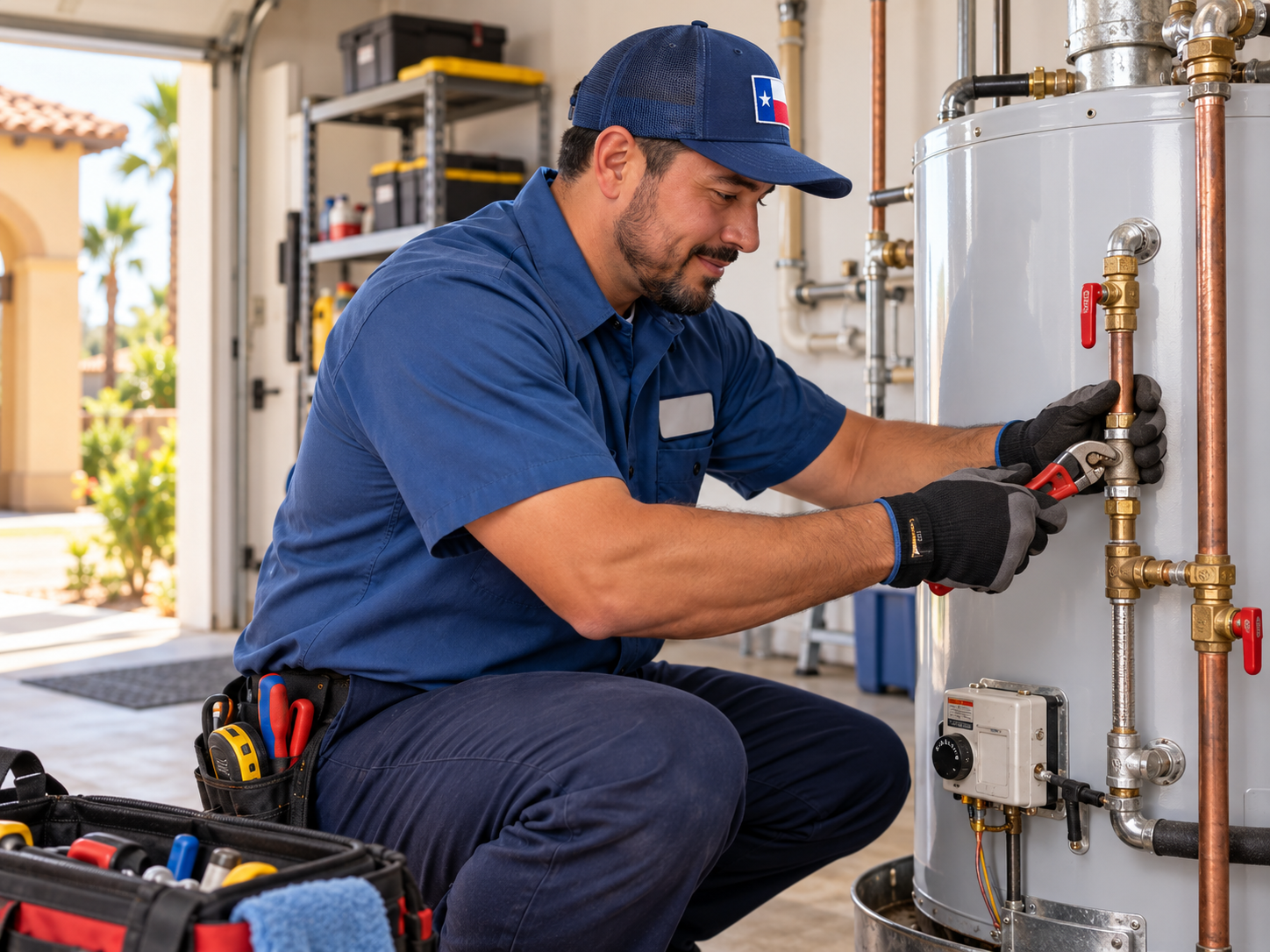
Installing a water heater involves more than swapping a tank: sizing for household demand, correct supply and relief connections, drain pan and discharge routing, proper venting for gas units, and safe removal of the old heater.
Replacing a water heater is one of the few plumbing projects where decisions made in ten minutes affect the next decade. Capacity, fuel type, recovery rate, physical location, and connection details all shape how the unit performs and how long it lasts.
This page explains what goes into a proper installation, how sizing is worked out, and which parts of the job are about safety rather than preference. If the current unit is only partly failing, the repair page covers whether it is worth keeping.
Common signs
- The existing tank is leaking from its body
- Hot water capacity no longer matches the household
- Repairs are becoming frequent on an aging unit
- Rust in the hot water or visible corrosion at the tank seams
- The unit is well past typical service life
- A remodel, added bathroom, or new appliance has changed demand
Possible causes
- Internal corrosion after years of service
- Sediment that has permanently reduced usable capacity
- An undersized unit relative to the number of fixtures in use
- A failed tank that cannot be repaired from outside
- Damage from excess pressure or an unaddressed relief valve issue
What a plumber may inspect
- Household size, fixture count, and peak simultaneous demand
- Available space, clearances, and access at the intended location
- Fuel type and existing electrical or gas provisions
- Condition of supply lines, shutoff valve, and connections
- Drain pan, pan drain routing, and floor condition
- Relief valve discharge path
- Venting arrangement and combustion air for gas equipment
- Water pressure and whether an expansion tank is appropriate
Typical repair options
- Like-for-like tank replacement
- The simplest path when the existing size, fuel, and location still suit the household and the connections are in good order.
- Capacity change
- Moving up or down in tank size when the household has changed, balanced against space and recovery rate.
- Tank to tankless conversion
- A different approach to hot water with its own requirements for gas sizing, venting, and electrical, covered on the tankless page.
- Connection and valve upgrades
- Replacing aging shutoff valves, flex connectors, and unions while the unit is out, since access is never easier than during installation.
- Pan, drain, and expansion additions
- Adding a drain pan with routed discharge or a thermal expansion tank where conditions call for it.
Choosing capacity and type
Capacity is about peak simultaneous use, not the number of people alone. A household that showers back to back and runs laundry at the same time needs more usable hot water or faster recovery than one that spreads usage out.
Recovery rate matters as much as tank volume. A smaller tank that reheats quickly can outperform a larger one that recovers slowly, particularly for morning demand.
Location constrains everything. Closet, garage, and attic installations each affect clearances, pan and drain routing, and venting, and those constraints often narrow the choice more than preference does.
What affects the cost
- Tank size, fuel type, and equipment selected
- Whether the installation location changes
- Condition of existing supply, gas, or electrical provisions
- Venting work required for gas equipment
- Pan, pan drain, expansion tank, and new valves
- Removal and disposal of the old unit
- Access difficulty, especially attic and tight closet installs
Actual pricing depends on inspection and service conditions. The plumbing cost guide explains these factors in more detail, and the complexity estimator gives a general educational range.
Prevention & maintenance
- Flush the new tank on a regular schedule from the start
- Have the anode rod inspected periodically rather than after problems appear
- Set the thermostat to a reasonable temperature rather than the maximum
- Keep the area around the unit clear so a leak is noticed early
- Keep the model and installation date recorded for future reference
- Have water pressure checked so the new tank is not stressed from day one
When this may be urgent
- The existing tank is leaking and cannot be isolated
- The household has no hot water at all
- Water from the heater is reaching finished flooring
- You smell gas near a gas unit
Call 956-797-6116 to describe an urgent plumbing problem.
Steps you can safely take
- Close the cold water supply valve above the failing unit if it is reachable and dry
- Turn off the breaker for an electric unit if the panel is dry and safe to reach
- Clear a path to the unit for removal
- Photograph the data label so model and capacity are on hand
- Note how the current unit vents and drains
What not to do
- Do not attempt gas line or venting modifications yourself
- Do not install a unit without a relief valve discharge path
- Do not reuse corroded connectors or a seized shutoff valve
- Do not block clearances around a gas heater with storage
- Do not skip the drain pan where a leak would reach finished space
Related plumbing services
Learn how the system works
Understanding the plumbing behind the symptom makes the repair discussion much easier.
How water heaters workNot sure which service you need?
Answer a few questions and get pointed to the most relevant page and urgency level.
Use the plumbing problem checkerAreas covered
Plumbing requests are taken for Laredo and nearby communities. Service availability varies.
Water Heater Installation questions
- What size water heater do I need?
- Sizing comes from peak simultaneous demand and recovery rate rather than a simple headcount. Fixture count, shower habits, and appliance use during the same hour matter more than the number of bedrooms.
- Can I install a larger tank in the same space?
- Sometimes, but clearances, height, door openings, and venting frequently limit it. Attic and closet locations are the most restrictive, and a taller or wider tank has to fit both the space and the code clearances.
- Is a drain pan required?
- Wherever a leak could reach finished space, a pan with a routed discharge is standard practice and often required. It converts a hidden leak into a visible one that drains somewhere harmless.
- What is an expansion tank for?
- Water expands when heated, and on systems that cannot push back toward the supply, that pressure has nowhere to go. An expansion tank absorbs it and protects the heater, valves, and fixtures.
- How long does a replacement take?
- A straightforward like-for-like swap is usually a matter of hours. Changing fuel type, relocating the unit, correcting venting, or installing in a tight attic space extends it.
- Should I switch to tankless while I am replacing?
- It is worth considering, but tankless equipment has its own gas sizing, venting, and electrical requirements. The tankless page covers what the conversion actually involves.
- What happens to the old heater?
- The old unit is drained, disconnected, and removed as part of the work, so you are not left with a full tank to deal with.
Request service or ask a question
Service requests are handled by phone and online. Describe the problem and your request will be reviewed based on location, the service needed, and availability.
Contact details
Plumber Laredo TX helps consumers request plumbing services. Service requests may be matched with an independent plumbing provider based on service needs and availability.
Need plumbing help in Laredo?
Tell us what you're dealing with and your request will be reviewed for availability.